
The US–Iran Nuclear Deal That Is Not Yet a Deal
A temporary pause in fighting has reopened the diplomatic window. But the central questions surrounding Iran’s nuclear programme remain unresolved.
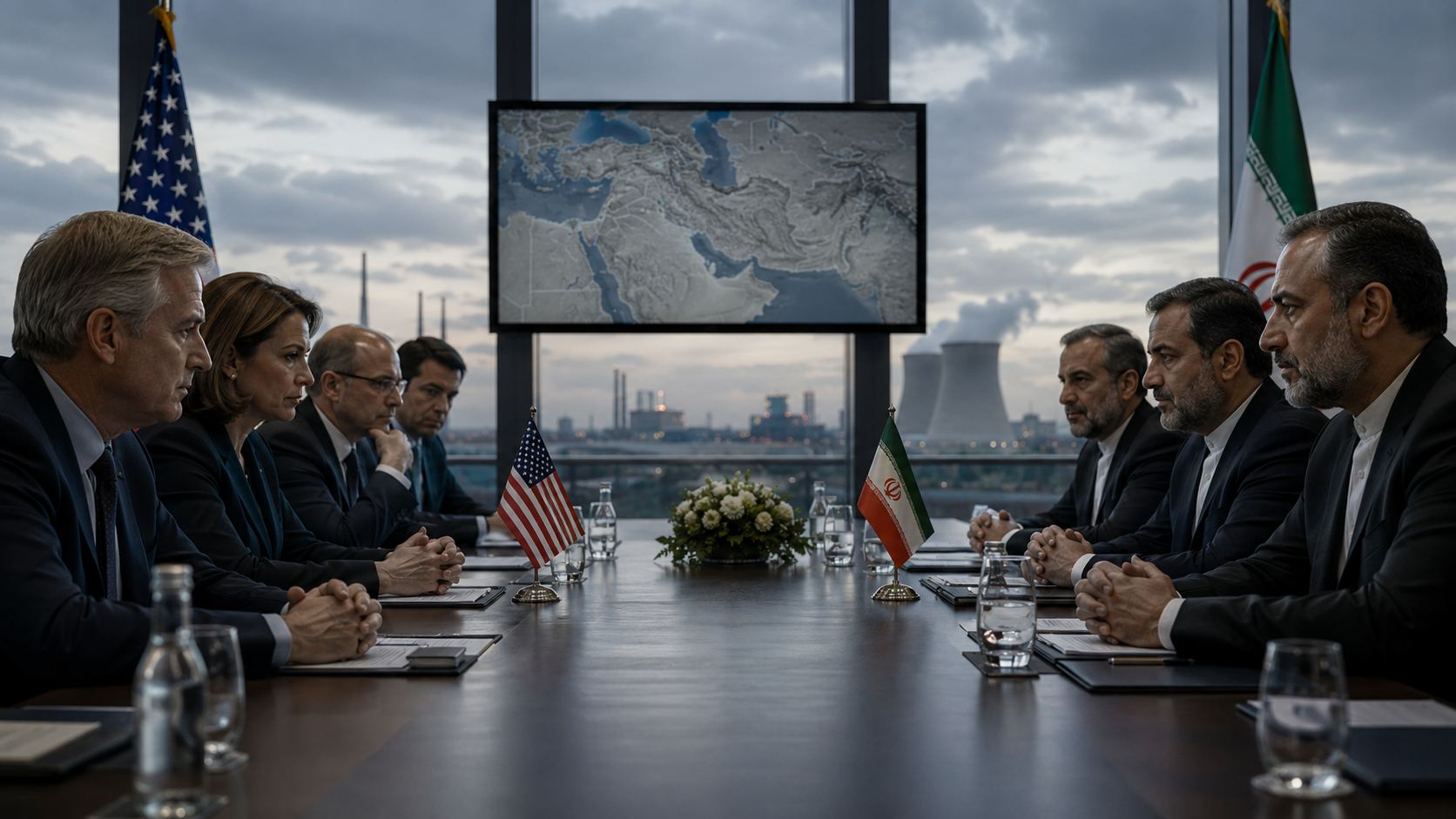
After almost two weeks of renewed military escalation, the United States and Iran have paused their attacks. The interruption has raised hopes that diplomacy may once again replace direct confrontation.
Yet the signals coming from Washington and Tehran remain contradictory. Al Arabiya reported that Iran had halted its strikes while US President Donald Trump was giving negotiations “space”. The Associated Press similarly described the pause as a positive signal for mediators attempting to revive the interim agreement concluded in June. Iran, however, publicly denied on 27 July that it had asked to resume negotiations with the United States. Tehran also insisted that the situation in the Strait of Hormuz had not fundamentally changed.
This is therefore not yet a diplomatic breakthrough. It is a military pause accompanied by indirect contacts, strategic ambiguity and an increasingly urgent search for a way out of escalation.
What was actually agreed in June?
In mid-June, the United States and Iran concluded a 14-point memorandum of understanding intended to end hostilities, reopen maritime traffic through the Strait of Hormuz and create a 60-day period for negotiating a more comprehensive agreement.
The memorandum included commitments concerning the cessation of military operations, respect for sovereignty, the removal of the US naval blockade, the release of frozen Iranian assets, sanctions relief and a possible international reconstruction and development programme for Iran.
But the memorandum was explicitly not a final nuclear agreement.
CNN’s reporting on the document emphasised that it was primarily a political framework designed to create the conditions for later technical negotiations. The text stated that Iran would not produce or acquire nuclear weapons, but deferred the fate of enriched material, Iran’s future enrichment activities and other technical nuclear questions to a subsequent agreement. Donald Trump himself acknowledged that the document was a memorandum of understanding rather than a final settlement.
The distinction matters. The June memorandum may have temporarily stopped a war, but it did not yet establish a verifiable non-proliferation regime.
The nuclear question was postponed, not solved
At the heart of the dispute lies Iran’s stockpile of highly enriched uranium and the future of its domestic enrichment programme.
According to the outline reported by Al Jazeera, Iran reaffirmed that it would not develop nuclear weapons. The memorandum also envisaged a mechanism for dealing with existing enriched material, potentially including downblending under the supervision of the International Atomic Energy Agency.
However, the framework did not determine the precise enrichment limits Iran would have to observe, the future scale of its centrifuge programme, the scope of IAEA inspections or the sequencing between Iranian nuclear concessions and US sanctions relief. Al Jazeera reported that Iran was believed to possess approximately 440 kilograms of uranium enriched to 60 percent — significantly above the level required for civilian power generation and much closer to weapons-grade enrichment.
CNN also reported that the document lacked detailed commitments regarding the highly enriched stockpile, despite stronger public claims by US officials about its eventual destruction or removal. The memorandum essentially preserved the status quo while leaving the most politically and technically difficult questions to later talks.
New York Times reporting similarly highlighted that the temporary arrangement had postponed the most contentious issues — especially the enriched uranium stockpile and the future of Iran’s nuclear programme — to the 60-day negotiating period. When renewed strikes began in July, those negotiations had still not produced a final settlement.
The result was an agreement built around a fundamental contradiction: both sides presented the memorandum as a success, while continuing to interpret its obligations differently.
Why did the framework begin to collapse?
The June memorandum depended on reciprocal implementation.
Iran expected sanctions relief, the release of frozen funds, a reduction of the US military presence and the removal of the naval blockade. Washington expected Iran to facilitate commercial shipping through the Strait of Hormuz, refrain from attacks and eventually accept substantial restrictions on its nuclear programme.
By early July, mutual accusations of non-compliance had returned. The United States and Iran exchanged attacks, and Trump declared that the ceasefire was over while US officials simultaneously insisted that negotiations could continue. Al Jazeera reported that Washington remained committed to technical talks even after renewed military operations.
Iran, meanwhile, argued that renewed US strikes, the reintroduction of economic pressure and disputes over the Strait of Hormuz had undermined essential parts of the memorandum. New York Times reporting described how the temporary truce unravelled while its most important nuclear provisions remained unresolved.
This demonstrates a structural weakness of the agreement: it attempted to combine a ceasefire, maritime security, sanctions relief, regional conflict management and nuclear negotiations within a single political framework.
A violation in one area could therefore destabilise the entire arrangement.
The Strait of Hormuz has become part of the nuclear negotiation
The future of Iran’s nuclear programme can no longer be analysed separately from control over the Strait of Hormuz.
For Tehran, the strait is both a security instrument and a source of negotiating leverage. For Washington and the Gulf states, freedom of navigation is a central economic and strategic interest. The June memorandum attempted to connect the reopening of the strait with the lifting of the US blockade and the beginning of nuclear negotiations.
But the parties never established a mutually accepted long-term maritime mechanism.
The Associated Press reported on 26 July that Oman was again engaged in efforts to negotiate arrangements for the safe passage of vessels. Commercial traffic through Hormuz remained at a three-week low, while the United States continued to enforce its renewed blockade against Iran.
Iran’s statement on 27 July that the status of the strait remained unchanged indicates that the current pause in attacks has not resolved the maritime dispute.
This is one reason the latest de-escalation should not be confused with the restoration of the June agreement.
The Gulf states are no longer observers
The Gulf states are directly exposed to every stage of the confrontation.
They host US military installations, depend on stable maritime trade routes and remain vulnerable to Iranian missiles, drones and attacks by Tehran-aligned armed groups. At the same time, several Gulf governments maintain diplomatic and economic relations with Iran and have repeatedly attempted to mediate between Tehran and Washington.
Oman continues to play a particularly important role in the negotiations over Hormuz. Other regional actors have also provided diplomatic channels intended to prevent the conflict from escalating into a wider regional war.
Their strategic dilemma is becoming increasingly visible: the Gulf monarchies continue to rely heavily on US security guarantees, but they do not want their territory or infrastructure to become the battlefield of a prolonged US–Iranian confrontation.
For the Gulf states, a sustainable agreement therefore requires more than restrictions on uranium enrichment. It must also include credible provisions for maritime security, the protection of regional infrastructure and mechanisms preventing future attacks on neighbouring countries.
What does the current pause mean for energy markets?
The market reaction to the interruption in strikes was immediate. On 27 July, oil prices fell by more than five percent as traders responded to the possibility of renewed diplomacy. Brent crude temporarily declined to approximately $91 per barrel.
This decline illustrates how strongly global energy markets remain tied to political and military signals from the Gulf.
But lower prices following a temporary pause should not be mistaken for structural stability. Shipping through Hormuz remains restricted, insurance and transport risks remain elevated, and tensions have also spread towards the Bab al-Mandeb and the Red Sea.
For European and international companies, the situation requires continued scenario planning rather than an immediate return to business as usual.
What would a credible nuclear agreement require?
A viable agreement would have to move beyond broad political declarations and establish measurable obligations.
First, Washington and Tehran would need to agree on the future of Iran’s 60-percent-enriched uranium, including whether it would be downblended inside Iran or transferred elsewhere.
Second, the parties would need to define Iran’s permitted enrichment level, centrifuge capacity and future production limits.
Third, the IAEA would require reliable and continuous access to relevant nuclear facilities and material.
Fourth, sanctions relief would need to be linked to clearly verifiable implementation steps rather than political assessments alone.
Finally, a durable agreement would need some form of regional coordination. Israel, the Gulf states and other neighbouring countries may not be formal parties to a bilateral US–Iran agreement, but their security calculations will directly affect whether it survives.
A pause, not peace
As of 27 July, the United States and Iran appear to have stepped back from immediate escalation. That is significant. Every day without further attacks reduces the danger of a wider regional war and gives mediators more space to operate. Nevertheless, there is currently no final US–Iran nuclear deal.
The June memorandum created a diplomatic architecture, but it deferred the most difficult nuclear questions. The renewed fighting in July then exposed how fragile that architecture remained.
The coming weeks will show whether the current military pause can be transformed into structured negotiations. The decisive indicators will not be public declarations alone, but progress on enriched uranium, IAEA inspections, sanctions sequencing and the management of shipping through the Strait of Hormuz.
Until those issues are resolved, the United States and Iran are not implementing a nuclear settlement. They are bargaining over the conditions under which genuine nuclear diplomacy might begin again.
The current pause has bought the region time. It has not yet bought peace.